

Pressure Monitoring
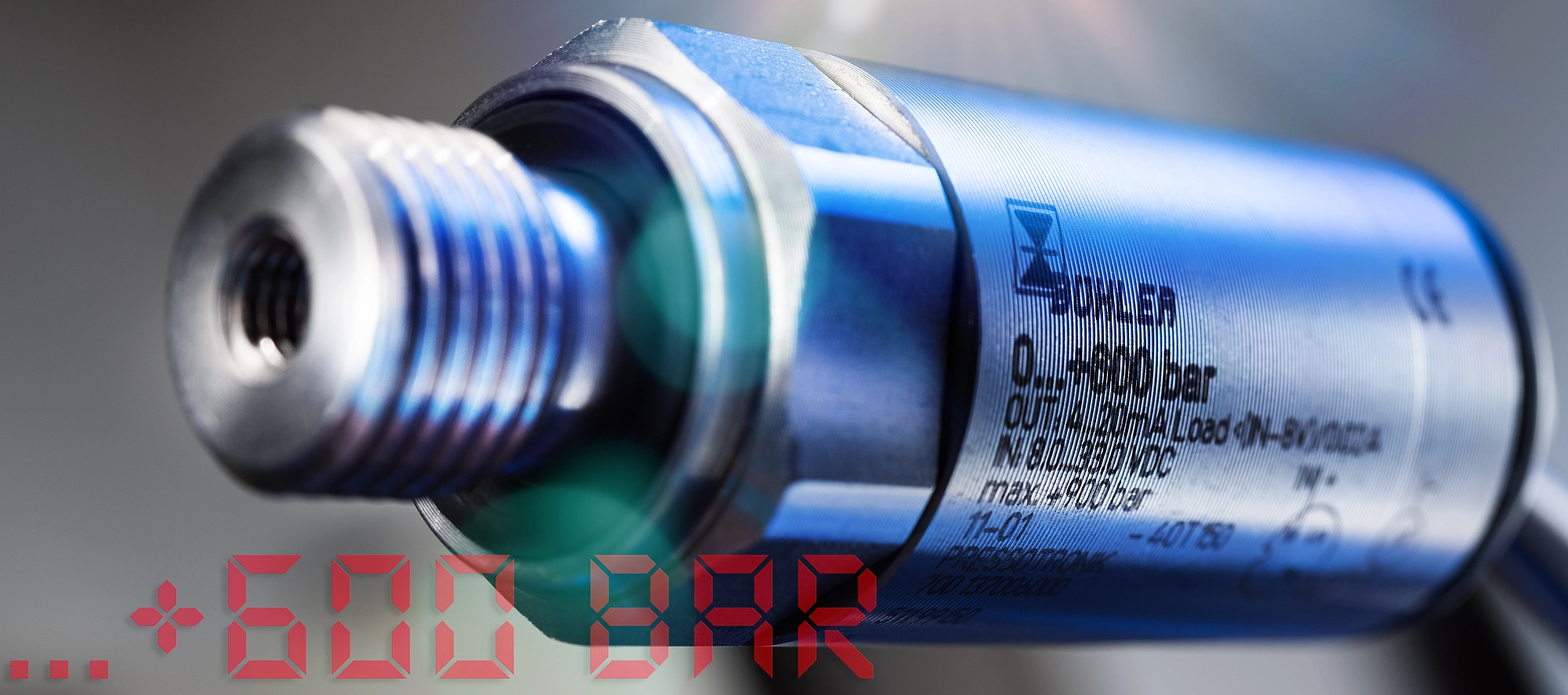
Pressure monitoring in hydraulic systems is a parameter for the transmitted power. In lubrication systems, the monitoring of the system pressure indicates whether all lubrication points of the system are being sufficiently provided with lubricant. Traditionally, conventional pressure switches, where metering points and displays are separated, transmitters and displays are connected by pipes or hoses. Bühler’s pressure measurement technology eliminates these connections and replaces them using flexible cables. This reduces the risk of leakage and the installation costs decrease significantly.

![[Translate to English:] Druck-Sensor und Schalter mit Druckstufen bis 600 bar](/fileadmin/_processed_/8/2/csm_tn_transmitter_702_0d808e8518.webp "[Translate to English:] Drucktransmitter Pressotronik Baureihe 702") Pressure transmitter Pressotronik 702 seriesShow details
Pressure transmitter Pressotronik 702 seriesShow details![[Translate to English:]](/fileadmin/_processed_/6/4/csm_th_pressotronik703_7c0c503dbc.webp "[Translate to English:]") Pressure transmitter Pressotronik 703 seriesShow details
Pressure transmitter Pressotronik 703 seriesShow details![[Translate to English:] Sensor und Drucktransmitter für die Überwachung des Öldrucks ist in Hydrauliksystemen und Ölversorgungsanlagen](/fileadmin/_processed_/0/c/csm_tn_pressotronik_672957f0a0.webp "[Translate to English:] Druckschalter/Sensoren Pressotronik Baureihe 700") Pressure switches/Sensors Pressotronik series 700Show details
Pressure switches/Sensors Pressotronik series 700Show details![[Translate to English:] Mechanische Druckschalter zur Drücküberwachung in Öl-Versorgungs-Anlagen](/fileadmin/_processed_/d/5/csm_tn_mds_06aa7934c9.webp "[Translate to English:] Mechanische Druckschalter MDS") Mechanical pressure switch MDSShow details
Mechanical pressure switch MDSShow details
![[Translate to English:] Druck-Sensor und Schalter mit Druckstufen bis 600 bar](/fileadmin/_processed_/8/2/csm_tn_transmitter_702_05004dfc93.webp "[Translate to English:] Drucktransmitter Pressotronik Baureihe 702")
![[Translate to English:]](/fileadmin/_processed_/6/4/csm_th_pressotronik703_bd616d5d69.webp "[Translate to English:]")
![[Translate to English:] Sensor und Drucktransmitter für die Überwachung des Öldrucks ist in Hydrauliksystemen und Ölversorgungsanlagen](/fileadmin/_processed_/0/c/csm_tn_pressotronik_4ae7019a22.webp "[Translate to English:] Druckschalter/Sensoren Pressotronik Baureihe 700")
![[Translate to English:] Mechanische Druckschalter zur Drücküberwachung in Öl-Versorgungs-Anlagen](/fileadmin/_processed_/d/5/csm_tn_mds_f284b9ee5a.webp "[Translate to English:] Mechanische Druckschalter MDS")



FAQ: Pressure Monitoring
- Why is pressure monitoring important?
In hydraulic systems, pressure represents the available power transmission capability. By selecting the maximum available operating pressure, the size of the actuators used can be optimized. For example, at an operating pressure of 300 bar, smaller cylinder diameters can be used to generate a specific force. At 150 bar, larger cylinders would be required to achieve the same performance. In other applications, maintaining a certain pressure level may also be safety-critical.
- Which pressure monitoring products does Bühler Technologies offer in the Fluidcontrol range?
- Are pressure switches also available?
- Are pressure transmitters with displays available?
- Can the displays be configured for different pressure units?