

![[Translate to English:]](/fileadmin/_processed_/e/5/csm_BCI_mood_e0e78abdc8.webp "[Translate to English:]")
Filter Monitoring
In stationary hydraulics and lubrication systems, return line filters or line filters are conventionally monitored using contamination indicators.
The contamination indicators from Bühler Technologies enable these filters to be utilised particularly economically. They continuously monitor the filter capacity and are an important component of condition monitoring. They transform industrial filters into intelligent wear sensors that help to monitor wear in the overall hydraulic system and enable timely intervention.
Bühler Technologies has specialised in filter contamination sensors for detecting differential pressure. The differential pressure in line filters arises between the filter inlet and outlet side and is generated as a result of particle separation on the filter elements. The clogging indicator converts the pressure loss into an electrical signal.
The BCI series from Bühler Technologies, short for "Bühler Clogging Indicator", monitors the differential pressure in line filters and generates electrical output signals proportional to the decreasing filter capacity. Many of the BCI variants are available with IO-Link. Thanks to IO-Link technology, these variants can be easily integrated into existing systems and support condition-based maintenance of the filters for smooth operation without unplanned downtime.
The filter contamination sensors with IO-Link technology are innovative, networked and predictive - they pave the way to greater efficiency in the direction of Industry 4.0.
![[Translate to English:]](/fileadmin/_processed_/e/3/csm_BCI-24-Dx-5-Compact_thb_8ebd46f7cf.webp "[Translate to English:]") Contamination indicator BCI 24-Dx-5 CompactShow details
Contamination indicator BCI 24-Dx-5 CompactShow details
![[Translate to English:]](/fileadmin/_processed_/e/3/csm_BCI-24-Dx-5-Compact_thb_bf2e9fed3d.webp "[Translate to English:]")
![[Translate to English:]](/fileadmin/_processed_/d/5/csm_BCI-Gruppe_thb_5f90b83ec5.webp "[Translate to English:]") Contamination indicator BCI 24-Dx ClassicShow details
Contamination indicator BCI 24-Dx ClassicShow details
![[Translate to English:]](/fileadmin/_processed_/d/5/csm_BCI-Gruppe_thb_68e12be996.webp "[Translate to English:]")



- Product Archive
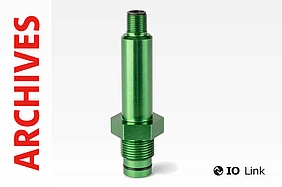 Contamination indicator BCI 24-Dx-4 (Aluminium)Show details
![[Translate to English:] Prozessor gesteuerter Differenz-Druck-Sensor zur Überwachung von Filter-Zustand](/fileadmin/_processed_/d/1/csm_tn_vsa_24_dm_597c304d68.webp "[Translate to English:] Differenzdruckanzeiger VSA 24-D") Differential pressure sensor VSA 24-DShow details
Differential pressure sensor VSA 24-DShow details
![[Translate to English:] Prozessor-gesteuerter Stau-Druck-Schalter und Temperatur-Sensor](/fileadmin/_processed_/1/7/csm_tn_vsa_24_sm_1da6d84c50.webp "[Translate to English:] Staudruckanzeiger VSA 24-S") Back pressure sensor VSA 24-SShow details
Back pressure sensor VSA 24-SShow details

![[Translate to English:] Prozessor gesteuerter Differenz-Druck-Sensor zur Überwachung von Filter-Zustand](/fileadmin/_processed_/d/1/csm_tn_vsa_24_dm_073d0ca3bc.webp "[Translate to English:] Differenzdruckanzeiger VSA 24-D")
![[Translate to English:] Prozessor-gesteuerter Stau-Druck-Schalter und Temperatur-Sensor](/fileadmin/_processed_/1/7/csm_tn_vsa_24_sm_bf634d1409.webp "[Translate to English:] Staudruckanzeiger VSA 24-S")
FAQ: Filter Monitoring
- What is the advantage of continuous monitoring of system filters in oil systems?
Proper working filtration is an essential component of any modern hydraulic or lubrication system. Depending on the system design, one or more working filters may be installed. When correctly designed and sized, these filters remove particles generated during operation from the oil circuit and maintain the required cleanliness class, such as those specified according to ISO 4406:99. Continuous filter monitoring ensures optimal utilization of the dirt-holding capacity of the filter element.
- What is dirt-holding capacity and how is it measured?
In professional oil filtration systems, dirt-holding capacity is determined by the usually multi-layered filter structure and the filter surface area resulting from its design and dimensions. It is a key factor in the economic efficiency of a filter. As particles accumulate within the filter element, the remaining dirt-holding capacity decreases and the pressure drop across the filter increases. In line filters, this pressure drop is measured as a differential pressure.
- Why does Bühler Technologies offer continuous output of differential pressure development?
Traditionally, line filter manufacturers provide contamination indicators with one or two alarm points. These indicators generally respond to changes in pressure loss regardless of the cause, for example increased oil viscosity during a cold start. This can often lead to unnecessary shutdowns or premature filter element replacement, even though the dirt-holding capacity has not yet been exhausted. Continuous monitoring of differential pressure development helps avoid such unnecessary waste.
- What additional advantages does continuous filter monitoring offer?
As dirt-holding capacity decreases, the differential pressure trend follows an exponential increase. By continuously monitoring differential pressure and comparing it with the current temperature profile, viscosity effects, such as cold-start conditions, can be identified. In addition, increases in particle generation can be interpreted as temporary or continuously rising, making it possible to detect the onset of wear processes. In this way, the filter effectively acts as a wear sensor.
- Is the Bühler Technologies BCI 24-DX-5 contamination indicator compatible with filters from different manufacturers?
Yes. Further information is available on the BCI 24-DX-5 Contamination Indicator product page, where you can also find the corresponding data sheet.